

Are you looking for a Shopify order tracking app that gives you real-time shipment tracking, a branded tracking page, dropshipping options, and a holistic analytics dashboard?
You have landed in the right place. Welcome to our Shopify order tracking app comparison series, where we'll give you a thorough breakdown of some of the most popular apps on Shopify so you can easily pick the right one!
The first one in this series is Trackr vs. AfterShip. So let’s dive right into it!
Trackr vs AfterShip: Quick Overview
While there are hundreds of order tracking apps on Shopify, finding the right one that checks all your boxes can be difficult. Trackr and AfterShip are two popular Shopify apps designed to help merchants improve their post-purchase experience, reduce WISMO (where is my order?) queries, and keep customers informed about their orders with real-time tracking.
Both apps carry essential features such as branded tracking pages, estimated delivery dates, shipment tracking across multiple carriers, and notifications. However, there are significant differences between the two in customization, post-purchase engagement, customer support, integrations, and pricing.
If we talk about AfterShip, it is popular amongst enterprise and high-volume merchants for its large ecosystem and advanced shipment tracking capabilities. Trackr, on the other hand, is focused on features like customization, branded tracking pages, WISMO reduction, customer retention, and turning tracking pages into revenue-generating post-purchase experiences.
Most Shopify merchants are concerned about support tickets, delivery transparency, purchase volume, and order tracking. These features are essential and can make or break their customer retention cycles. Therefore, it is important to select the right order tracking app that checks all the right boxes.
Feature-Wise Comparison
Branded Tracking Pages
Most Shopify merchants prefer a branded tracking page that helps in creating a consistent post-purchase experience and avoids sending customers to a third-party carrier website.
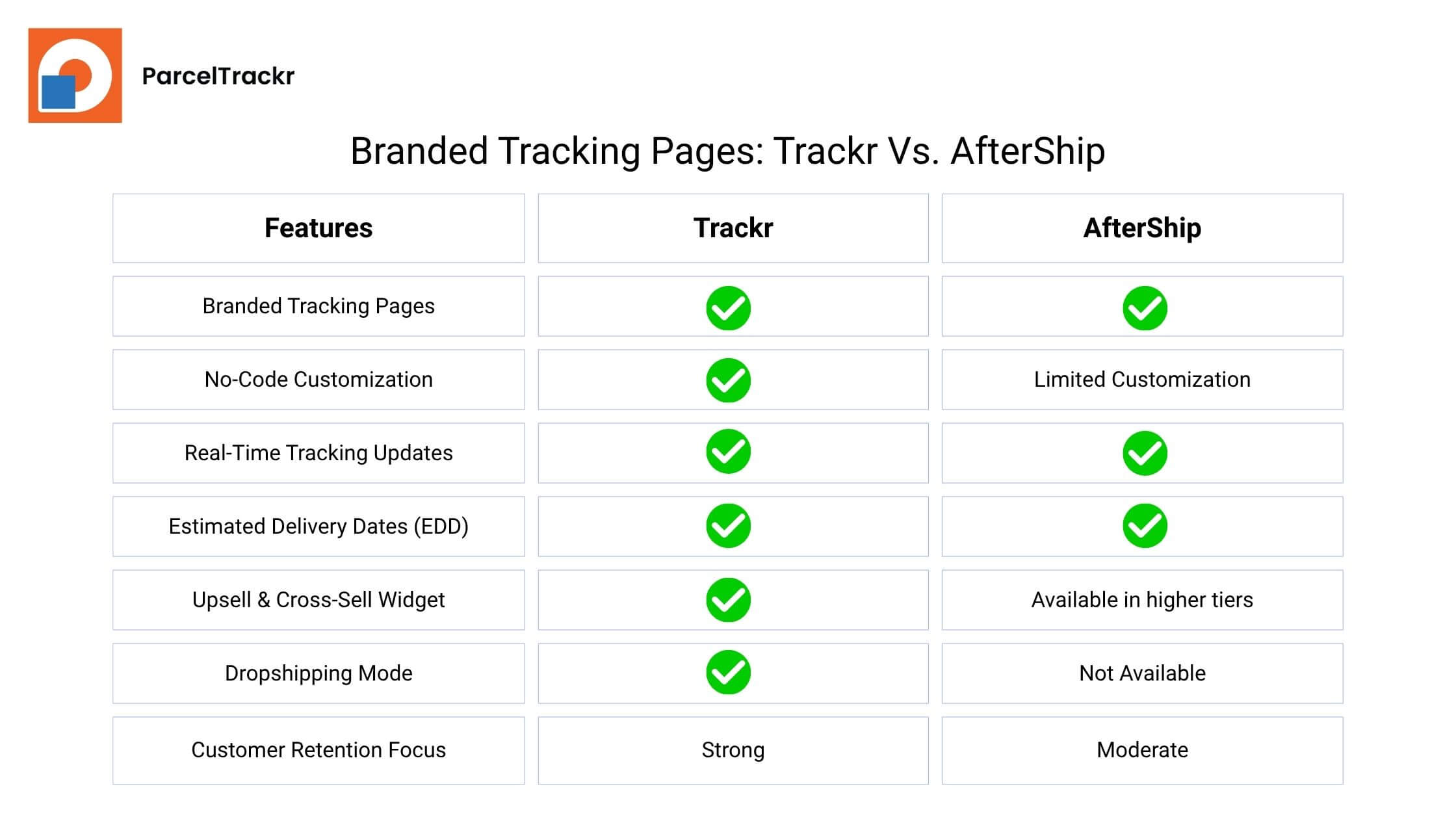
Branded tracking pages are essential tools for building customer trust and retention. Both Trackr and AfterShip offer branded tracking pages with real-time shipment tracking and delivery updates. Merchants can customize tracking pages to match their store branding, helping improve customer trust and retention.
AfterShip focuses heavily on shipment visibility and carrier integrations, while Trackr places additional emphasis on post-purchase engagement and conversion-focused customization.
Here’s a side-by-side comparison of Trackr and AfterShip branding pages:
WISMO Reduction & Delivery Updates
When customers keep hitting the “where’s my order” query, it becomes a nightmare for Shopify merchants. WISMO queries are one of the major reasons why merchants look for a robust order tracking app on Shopify.
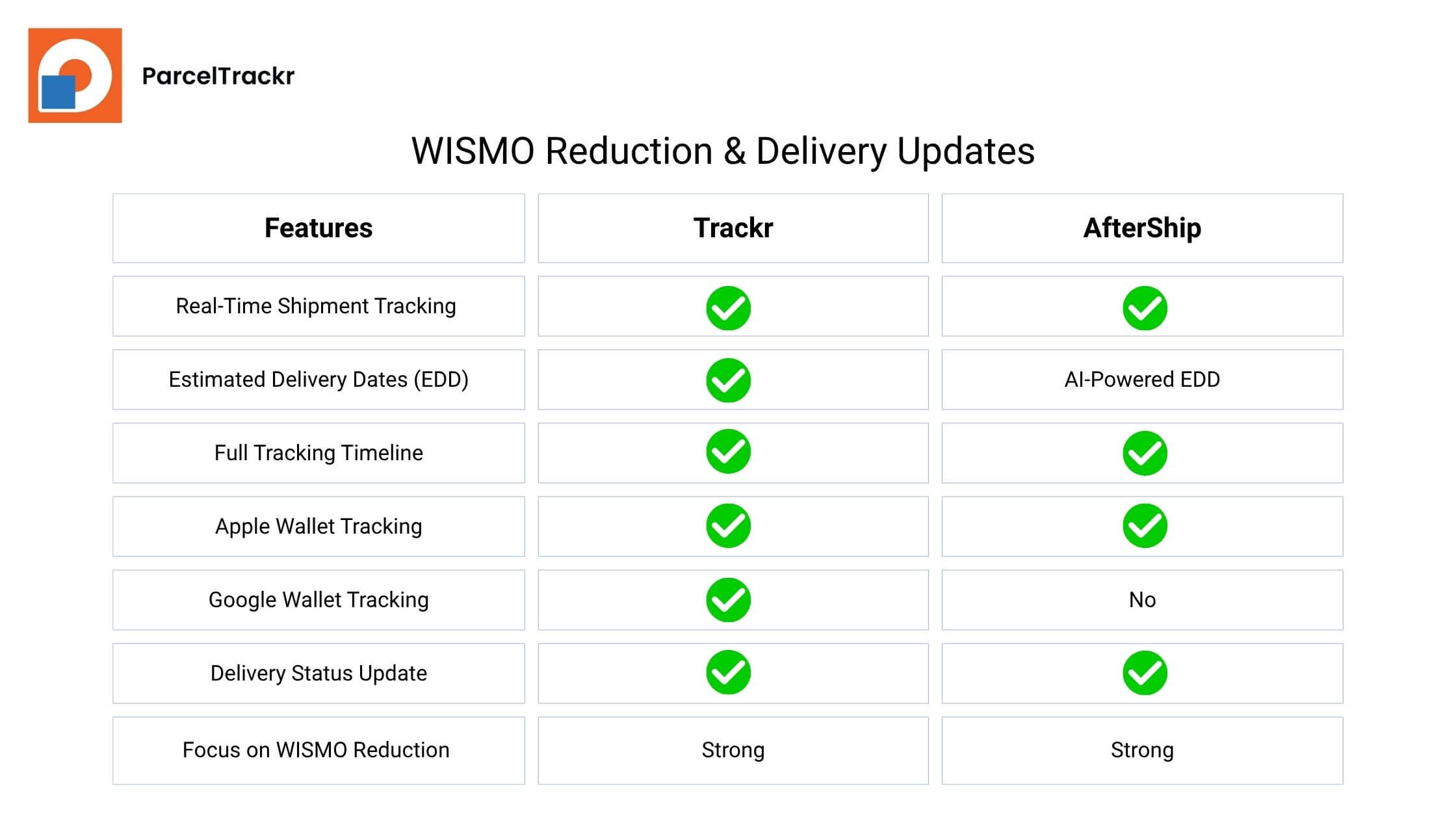
Both Trackr and AfterShip help merchants improve delivery transparency and reduce customer support requests through shipment tracking and delivery notifications.
Here’s a quick comparison between Trackr & AfterShip for WISMO reduction and delivery updates:
Shipment Notifications & Customer Communication
Shipment notifications are essential for improving customer communication and reducing support workload.
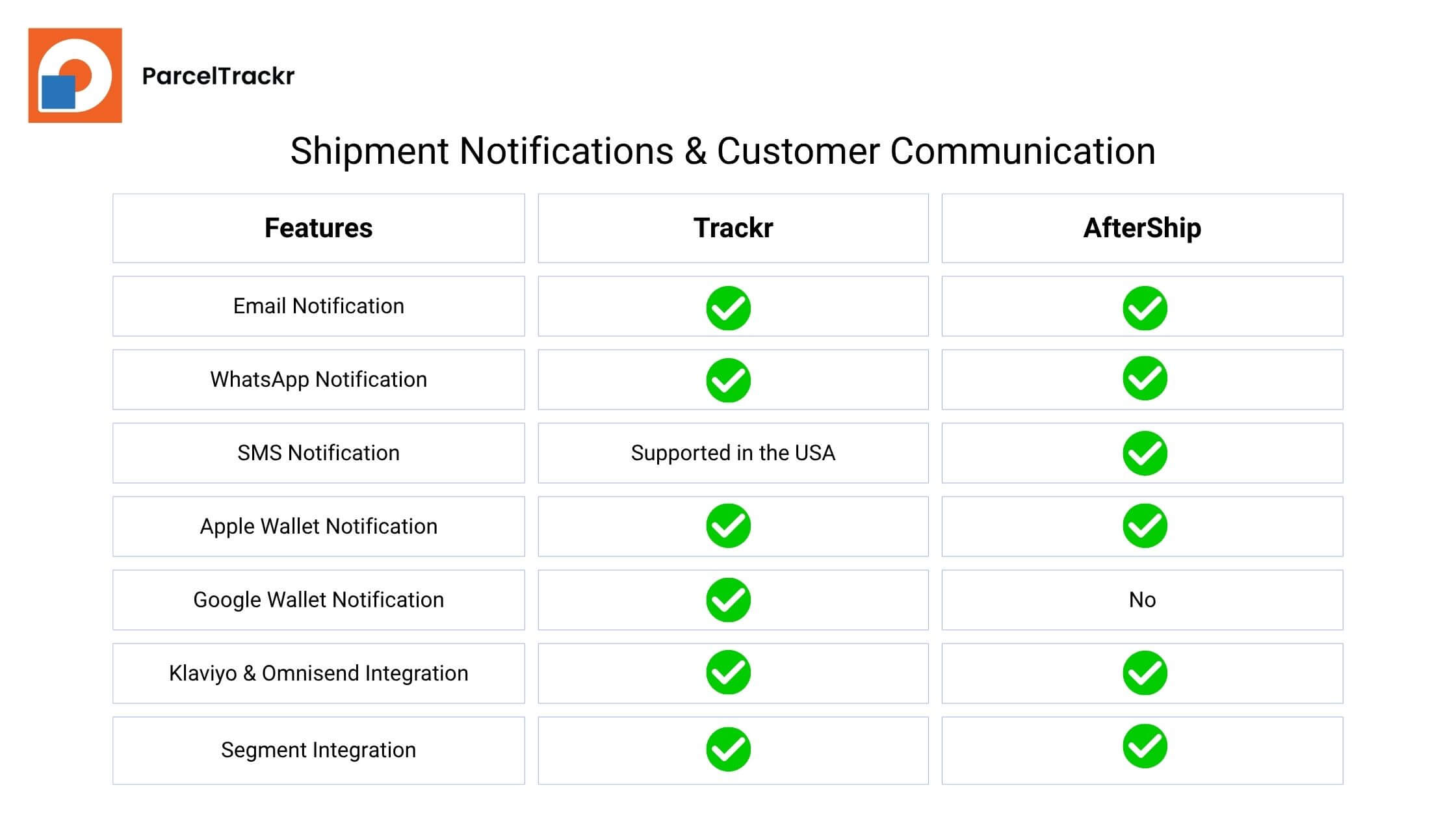
Both platforms support automated shipping notifications across multiple channels.
Here’s a quick glance at shipment notification features:
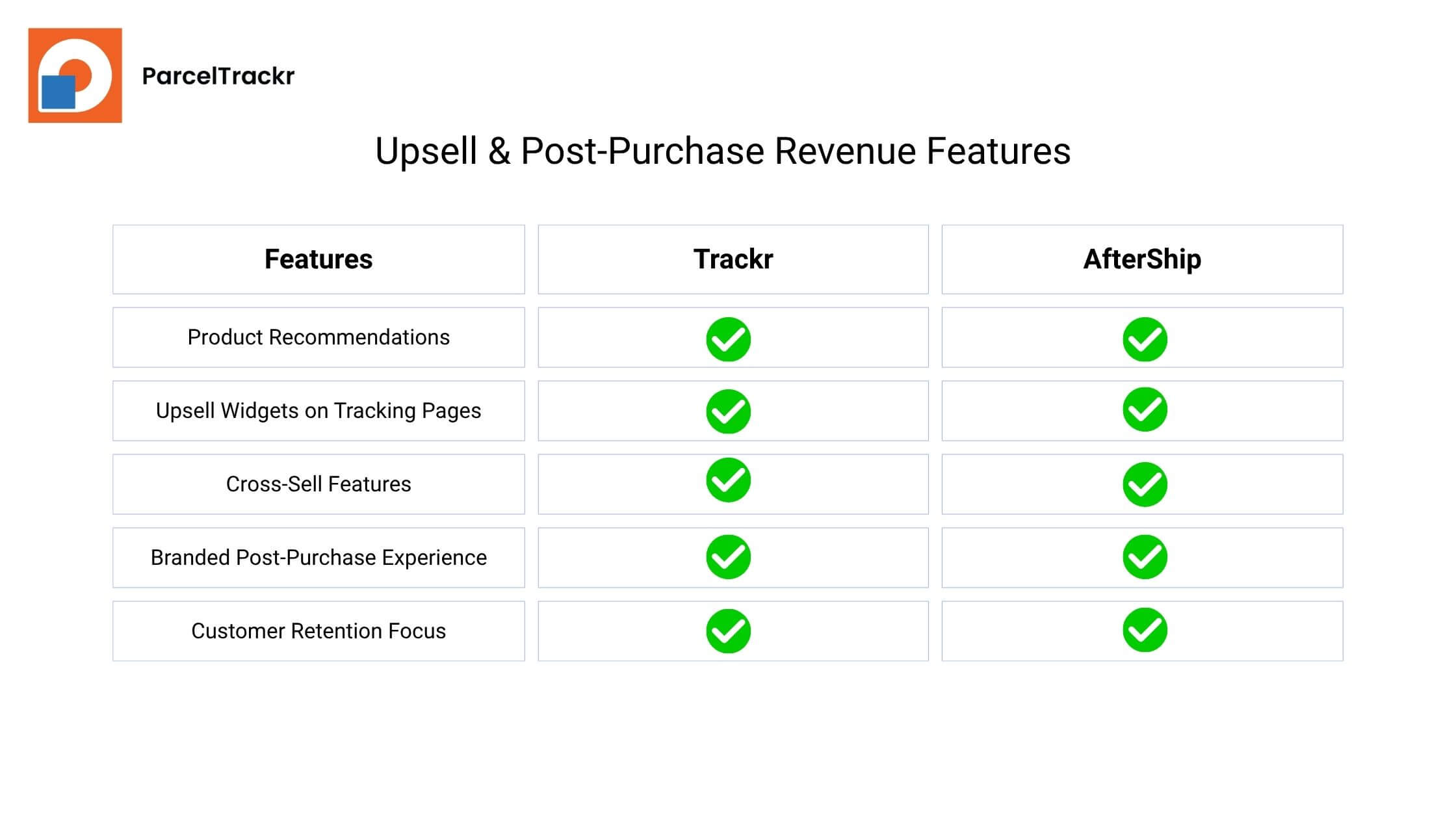
Upsell & Post-Purchase Revenue Features
Many Shopify merchants now use post-purchase experiences to improve customer retention and increase repeat purchases.
Trackr places a stronger emphasis on turning tracking page visits into additional revenue opportunities through post-purchase upsell and cross-sell experiences.
Analytics & Tracking Insights
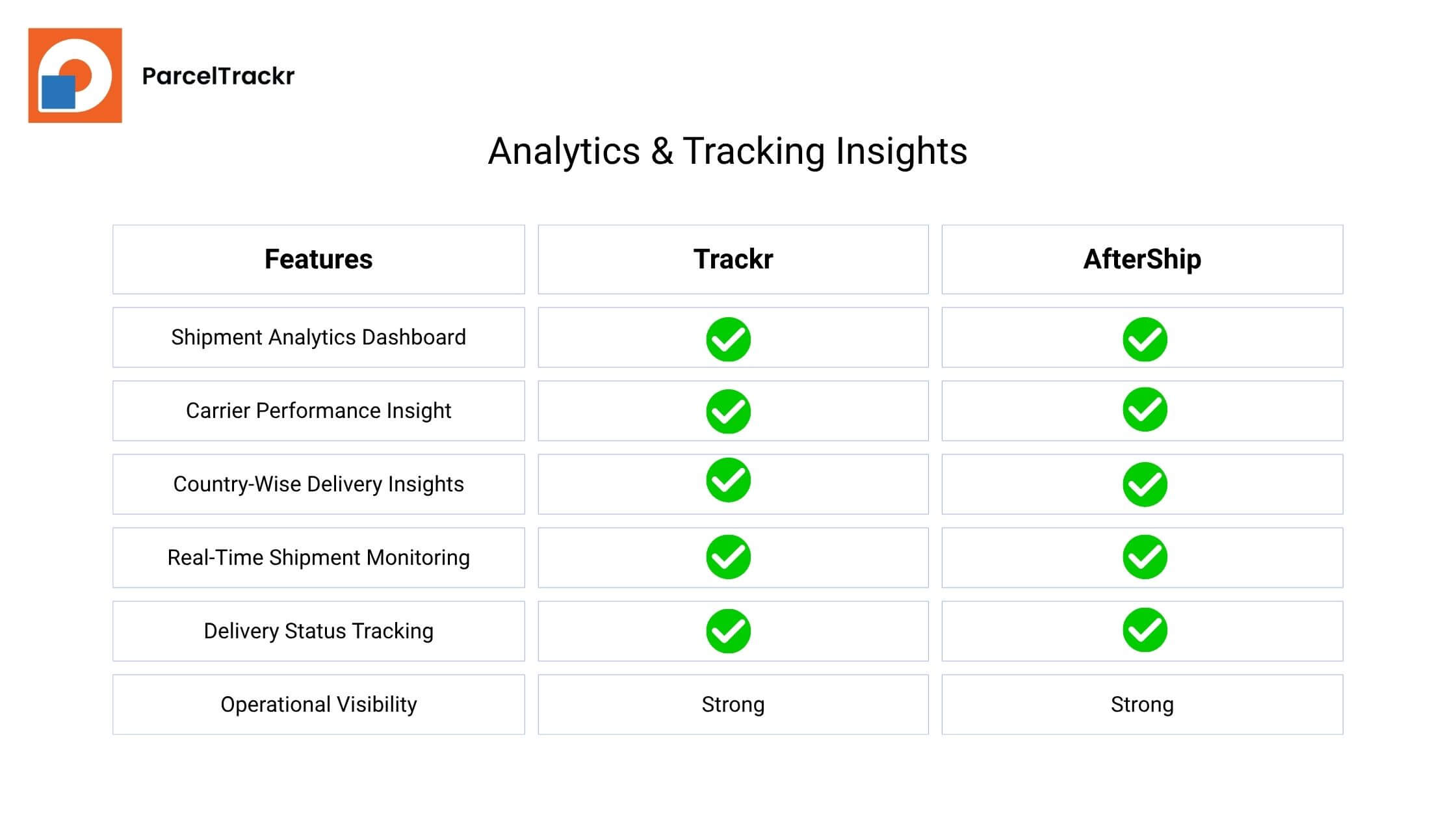
Shipment analytics help merchants monitor delivery performance and identify operational issues.
Both platforms offer shipment tracking insights and carrier performance visibility.
Dropshipping Features
For dropshipping businesses, maintaining a branded customer experience during shipment tracking is especially important.
Both Trackr and AfterShip support dropshipping order tracking workflows, but Trackr includes features specifically designed for branded dropshipping experiences.
Trackr allows merchants to:
- Hide carrier information
- Mask Chinese origin details
- Create branded order tracking pages
- Maintain a more professional post-purchase experience
This helps Shopify dropshipping stores protect supplier information while improving customer trust and reducing confusion during delivery tracking.
For AliExpress and global dropshipping merchants, branded shipment tracking can improve customer confidence and reduce delivery-related support requests.
Pricing Comparison
Now, let’s come to a significant factor that heavily affects merchants’ decisions when choosing a tracking solution.
AfterShip currently has free, Essential, and Premium plans. While the free plan comes with limited features like 50 shipments/month, a branded page without a logo, etc., the Essential and Premium plans are priced at $11 and $70.
As an Aftership alternative, Trackr has four plans: Basic, Standard, Advanced, and Enterprise. All of these plans has 14 days free trial along with some added benefits at each level. Trackr’s Basic plan starts at $10 and offers 400 shipments/month along with features like a branded tracking page, EDD, SMS/Email/WhatsApp notifications, etc.
An important difference between the two is that Trackr’s Basic and AfterShip’s Essential plans are almost the same price, $10 and $11, respectively. AfterShip’s Essential plan covers 100 shipments/month, while Trackr’s Basic plan covers 400 shipments/month, which is almost 3 times at the same price range.
Here are the pricing for both Trackr and Shopify that can help merchants explore all the benefits of different plans and make the best decision:
Conclusion
AfterShip remains one of the most recognized shipment tracking platforms in the Shopify ecosystem, especially for enterprise-level logistics operations.
However, Trackr stands out for merchants looking for:
- Branded order tracking
- Better customer engagement
- Post-purchase upsell opportunities
- Flexible customer communication
- Dropshipping-friendly tracking
- Revenue-focused post-purchase experiences
For Shopify merchants who want to reduce WISMO queries, improve delivery transparency, and increase repeat purchases, Trackr provides a balanced all-in-one post-purchase experience platform designed for modern ecommerce growth.


